
Kurtis Bowman, the architect responsible for the new design of La Hacienda Links Golf Resort, has transformed the course into a benchmark for golf on the Costa del Sol. His vision was clear: to create a seaside golf course comparable to the best in the world, similar to Pebble Beach.
The redesign of La Hacienda Links Golf Resort marked a turning point for this course on the Costa del Sol. This renovation, one of the most significant decisions made by Millennium Hospitality, focused on improving both the course layout and its conditioning, ensuring that sustainability was a key pillar of the project. He not only aimed to raise the standard of the course but also to ensure that its sustainability values were present in every detail of the course.
This was the first redesign he undertook in Europe, which marked a turning point in his career. This excerpt contains a summary of the highlights from the interview with Bowman, where he shares his vision, the challenges of the redesign and the future of La Hacienda Links.
Spain’s Pebble Beach
Kurtis Bowman explains in his interview that before this redesign, Spain already had many great golf courses, but none that stood up to the best in the world and offered a unique beachfront experience. In Bowman‘s words, his goal was to create a course like Pebble Beach, but on the Costa del Sol. “Before the redesign, golfers only talked about the views, not the course,” the architect notes. Now, with the new design of La Hacienda Links, that gap has been filled.
A Challenging Golf Course: The Key to the Redesign
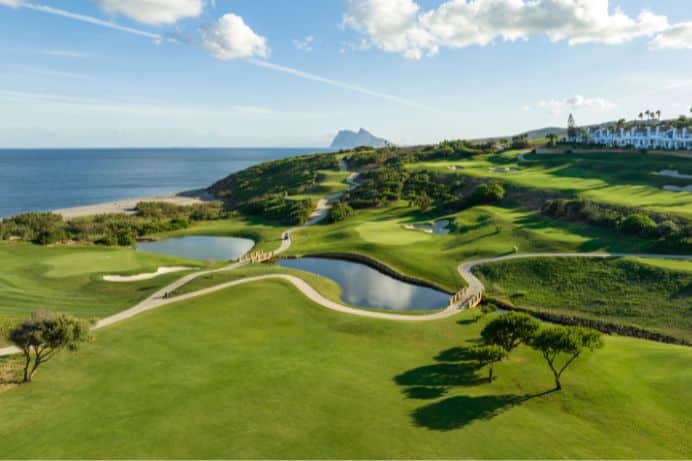
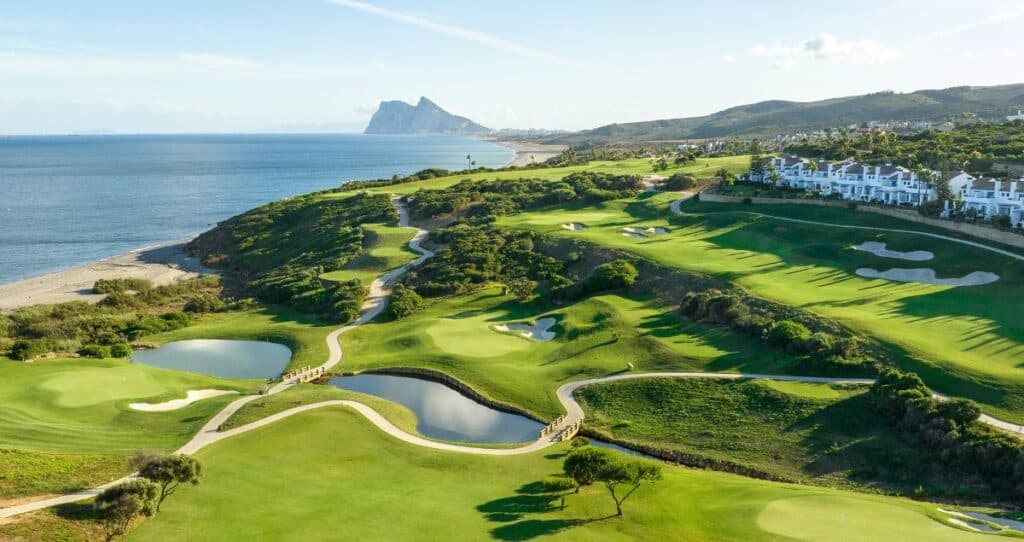
Kurtis Bowman was clear that the main objective of this redesign was to create a course that was not only challenging but also fun to play. He also emphasized that the course’s location, surrounded by other major names such as Valderrama, Real Club de Golf de Sotogrande, La Reserva, and Finca Cortesín, gave it direct competition in terms of quality… but that La Hacienda Links stands out for its oceanfront location, with unique panoramic views. On a clear day, golfers can even see the Atlas Mountains in Morocco, as well as the Rock of Gibraltar.
The Importance of Details for Kurtis Bowman: Constant Work on the Ground
During the redesign, Bowman spent more than 150 days at La Hacienda overseeing the construction. Unlike other modern golf courses, it was essential that this course redesign be an evolution built directly on the ground. Working with the La Hacienda team, particularly Ricardo Barón and Javier Gutiérrez, was essential to ensuring the smallest details were well executed. “Getting the small details right can mean the difference between good and great,” explains Bowman.
Tees, Greens, and Bunkers: Strategy and Sustainability in the Design
One of the key aspects of the redesign was the creation of new tee boxes, greens and bunkers, which have led to a new golf strategy for players on the course. Kurtis Bowman detailed in his interview how irregularly shaped tees, or “freeform ribbons,” were installed, allowing the markers to adjust depending on the wind. This provided an additional challenge for golfers, as wind plays a crucial role in the playability of the course.
When it came to the greens, Bowman explained that they were designed with an innovative approach, creating large putting surfaces with bold contours and generous sizes that offer difficulty without requiring excessively fast maintenance. This prevents the wind from moving the ball uncontrollably. Furthermore, bunker use was moderate, with only about 0.61 hectares designated for sand hazards in total to ensure sustainable golf course maintenance without sacrificing strategy.
Wind: A Key “Hidden Hazard” on the Course
One of the biggest challenges posed by the design of La Hacienda Links was the wind. As Robert Trent Jones Jnr. describes it, this wind is considered a “hidden hazard” on the course. Bowman explained that the prevailing Levante and Poniente winds create an additional challenge for golfers, changing the dynamics of the holes depending on the direction and strength of the wind.
Levante, blowing from the sea, and Poniente, coming from inland, are the winds that define the course. Furthermore, the way the tees were designed allows golfers to play with the wind direction, adjusting the course and making each round unique.
Hole 5: A Unique Par 5 with Spectacular Views
Bowman’s favorite hole may be the 18th, but he pointed out that the most unique is the fifth: a downhill par five that sits right next to the Mediterranean, with the Rock of Gibraltar as a backdrop. This hole isn’t only challenging, it also offers unparalleled views that make it one of the most photographed holes on the course. The green on hole five is connected to the green on hole 13, totalling an impressive 2,000 square meters, making it one of the largest golf greens in Spain.
A Sustainable Golf Course Designed to Last
Sustainability was a priority in the course’s redesign. With a focus on resource efficiency, Kurtis Bowman implemented the Rain Bird Integrated Control irrigation system, the most advanced available, enabling more efficient water use. Additionally, reclaimed golf water is used for irrigation, and grasses that thrive in the coastal environment have been selected, reducing the need for turf fertilization and additional resources. All of this contributes to a more sustainable golf course without compromising quality.
Come and Enjoy one of Spain’s Best Golf Courses, with the Kurtis Bowman Seal of Quality
Kurtis Bowman’s goal was to create a challenging course, yet one that was also both accessible and fun. In his opinion, La Hacienda Links has become one of the best golf courses in Spain, both due to its oceanfront location and the challenges presented by the wind and the strategic layout of the course. With the redesign, it seems he has achieved that perfect combination that attracts golfers from all over the world.